The Restaurant Tip Calculator Nobody Asked For But Everyone Needs
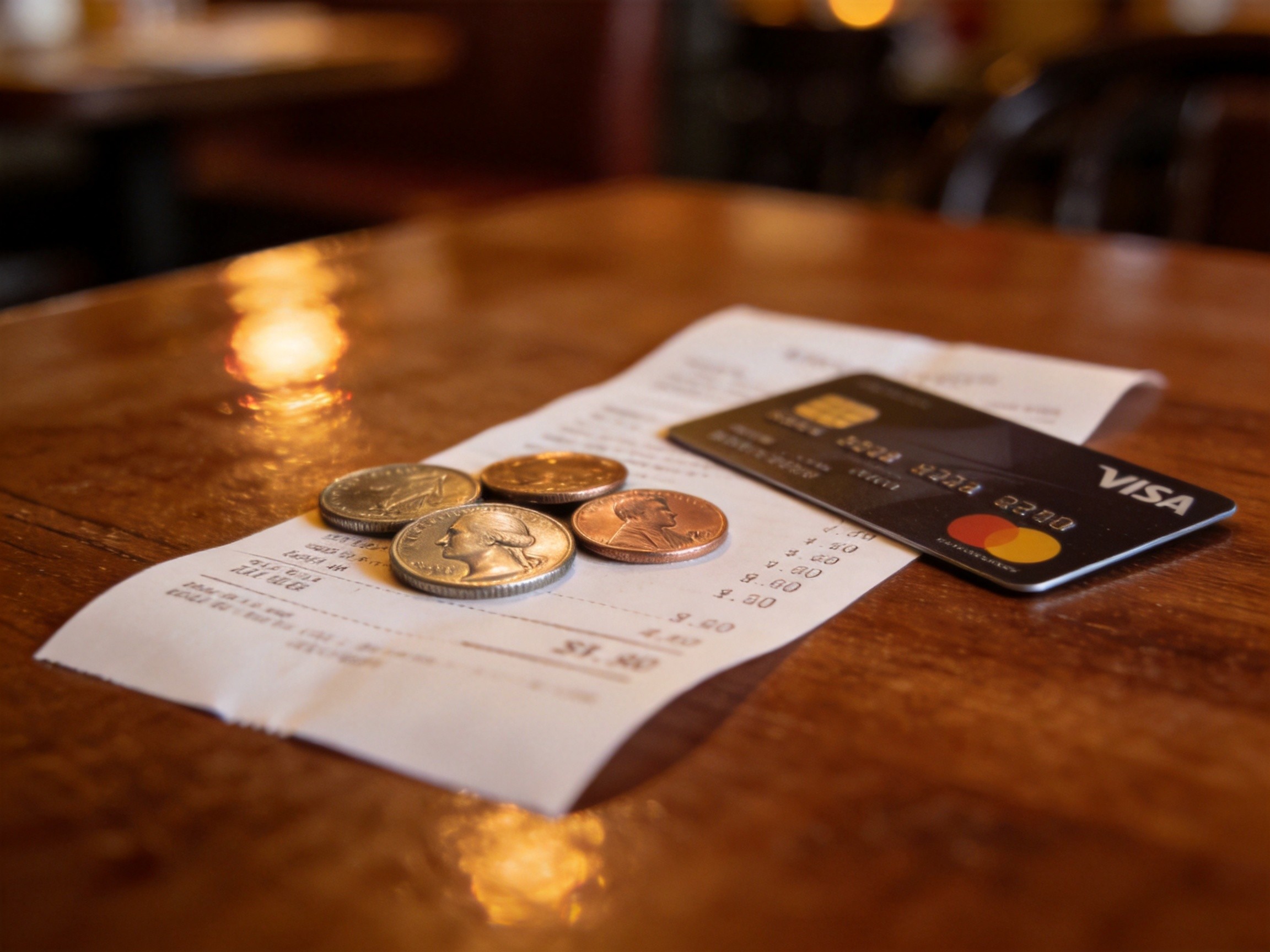
Last month I was at a restaurant with six friends and the bill came to $347. We spent ten minutes arguing about the tip. One person said 15%, another said 20%, someone else pointed out that 18% gratuity was already included for parties of 6+, and then we had to figure out if the included gratuity was on the pre-tax or post-tax amount. The server was standing there the whole time. It was painful.
Tipping shouldn't be this complicated. But it is — because the rules are inconsistent, the social expectations are changing, and nobody wants to be the cheapskate who under-tips or the sucker who over-tips. Let me break down the actual math, the evolving norms, and the situations where most people get it wrong.
The Current State of Tipping in America
Let's start with the numbers, because they've shifted significantly in the last few years:
- 2019 average tip: 17.8% at full-service restaurants
- 2023 average tip: 17.9% at full-service restaurants
- 2025 average tip: 17.6% at full-service restaurants (yes, it's actually declining slightly)
But averages hide a bimodal distribution. Some people tip 15% religiously, others tip 22% or more. The "standard" advice has drifted from 15% to 18-20% over the past decade, driven by inflation awareness and the pandemic-era appreciation for service workers. But actual behavior hasn't fully caught up with the new recommendations.
Meanwhile, tip screens are now everywhere — coffee shops, food trucks, retail stores, even self-checkout kiosks. The proliferation of tip prompts (sometimes called "tip fatigue") is actually pushing average tip rates down as people feel nickel-and-dimed from every direction.
The Pre-Tax vs. Post-Tax Debate
Here's a question that starts arguments every time: should you calculate the tip on the pre-tax or post-tax amount?
The traditional answer is pre-tax. The tip is for service on the food and drink you ordered, not on the tax the government collects. On a $100 bill with 8.5% sales tax, the pre-tax total is $100 and the post-tax total is $108.50. At 20%, that's the difference between a $20 tip and a $21.70 tip. Not huge, but it adds up over thousands of meals.
The practical answer is that most people tip on the post-tax total because that's the number at the bottom of the receipt. It's easier and it's slightly more generous, which most people prefer to being seen as calculating.
My take: tip on the post-tax amount. The extra $1.70 matters more to the server than to you, and the mental math is simpler.
When Gratuity Is Already Included
Most restaurants add automatic gratuity (usually 18%) for parties of 6 or more. This is where people make two common mistakes:
Mistake 1: Double-tipping. You see the 18% gratuity on the bill and you also leave a 20% tip on top of it, not realizing the gratuity already IS the tip. Congratulations, you just tipped 38%. The restaurant doesn't usually itemize this clearly — the gratuity line just says "Gratuity" or "Service Charge," and the tip line on the credit card slip is still blank and tempting.
Mistake 2: Assuming included gratuity is the tip. An 18% auto-gratuity is technically the minimum. If the service was exceptional, you can add more. Most people don't, and that's fine — 18% is adequate. But it's not the ceiling.
The other wrinkle: some restaurants add a "service charge" instead of "gratuity." In some jurisdictions, service charges go to the restaurant, not the server. If you see "service charge" instead of "gratuity," ask the server whether they receive it. If not, you should tip separately.
The Split-Bill Nightmare
Splitting a bill among multiple people is where tip calculations get genuinely messy. There are three approaches, and they produce different results:
Split evenly, tip evenly. Total bill divided by number of people, tip calculated on each person's share. Simple, but unfair if one person ordered a steak and another ordered a salad.
Pay for what you ordered, tip individually. Each person pays for their items and tips on their portion. Fair, but the total tip percentage can vary wildly depending on what each person ordered. The person who had a $12 beer tips $2.40 (20%) while the person who had a $40 steak tips $8 (20%). Both 20%, both fair.
One person pays, others Venmo. One person covers the bill and tip, others send money for their share. This often results in the payer covering the tip, which means the payer tips on the full amount while everyone else pays only for their food. If you do this, agree in advance on how the tip will be split.
The real answer: use a calculator. I've seen too many groups fumble through the math after two glasses of wine and end up either significantly over-tipping (because everyone rounds up) or under-tipping (because the mental math is off). There's no shame in pulling out your phone.
Tipping Around the World
If you travel internationally, tipping rules change dramatically. Here's a quick reference for common destinations:
- United States: 15-20% expected at sit-down restaurants. 0% at fast food.
- Canada: 15-20%, similar to the US.
- United Kingdom: 10-15% if service charge not included. Often included already.
- France: Service is legally included ("service compris"). Rounding up is appreciated.
- Japan: Tipping is not customary and can be considered rude.
- Germany: 5-10% is standard. Round up the bill.
- Australia: Not expected. Servers are paid higher base wages.
- Mexico: 10-15% is customary.
- Brazil: 10% is standard, often included as "gorjeta."
The cultural differences are significant enough that many travel guides now include tipping advice as a standard section. Overtipping in Japan can create an awkward situation. Undertipping in New York City can get you dirty looks (or worse, from the server's perspective, nothing at all because they're too professional to show it).
The key principle: tip according to local custom, not your home country's norms. You're not being generous by overtipping in a culture where it's not expected — you're being confusing.
The Dark Side of Tipping Culture
I can't write about tipping without acknowledging the systemic issues:
In the US, the federal minimum wage for tipped workers is $2.13/hour (it hasn't changed since 1991). Employers are supposed to make up the difference if tips don't bring the worker to the regular minimum wage, but enforcement is weak and violations are common. Your tip literally determines whether a server can pay rent.
This creates an uncomfortable dynamic: the customer subsidizes the employer's labor costs. The tip isn't a bonus for good service — it's a wage that the employer has offloaded onto the customer. And because tips are discretionary, a server's income can vary wildly based on factors they can't control: the weather, the shift, the customers' mood, the restaurant's location.
Some restaurants have moved to a no-tipping model with higher menu prices and higher base wages for staff. It's more transparent and more stable for workers, but customers often resist because higher menu prices "feel" more expensive than menu prices plus tip, even when the total cost is the same.
I don't have a solution for the systemic issues. What I can do is help people tip correctly and fairly within the current system.
Tipping for Non-Restaurant Services
Restaurant tipping is complicated enough, but the tip creep into other services has made things even more confusing. Here's my personal guidelines:
- Barista/Coffee shop: $1-2 in the tip jar, or round up. 20% on a $6 coffee is generous but not unreasonable.
- Food delivery: $3-5 minimum, or 15-20% of the order, whichever is more. Delivery drivers pay for gas and vehicle maintenance.
- Haircut: 15-20% for the stylist. $5-10 for the person who shampoos your hair.
- Taxi/Rideshare: 15-20%. More for exceptional service or difficult conditions.
- Hotel housekeeping: $2-5 per night, left daily (different staff may clean your room each day).
- Valet parking: $2-5 when your car is returned.
- Movers: $20-50 per mover for a full day's work.
The new tip screens at counter-service restaurants and retail shops? Those are optional. The "20%, 25%, 30%" suggestions on the iPad screen are aggressive by design — they're designed to make you feel guilty for tipping less. Tip if the service was exceptional, skip it if it wasn't. Counter service doesn't carry the same expectation as sit-down service.
Mental Math Shortcuts
If you don't want to use a calculator every time, here are some shortcuts:
- 10% of any amount: Move the decimal point one place left. $47.30 → $4.73
- 20% of any amount: Double the 10%. $4.73 × 2 = $9.46
- 15%: Calculate 10%, then add half of that. $4.73 + $2.37 ≈ $7.10
- 18%: Calculate 20%, then subtract 10% of the 20%. $9.46 - $0.95 ≈ $8.50
Or just use a calculator and save yourself the mental gymnastics. Especially after a couple of drinks.
The Takeaway
Tipping is part math, part social convention, and part guilt. The math is straightforward — it's a percentage. The social conventions are inconsistent and evolving. The guilt is real and often misplaced.
My rule of thumb: 20% for good sit-down service in the US, pre-tax if you're being precise and post-tax if you're being generous. Tip on the full amount when splitting a bill. Check if gratuity is included before adding more. And when in doubt, round up.
I built a tip calculator that handles the common scenarios: individual and split bills, pre-tax and post-tax calculations, and custom percentages. It also shows you the tip per person for group situations. Because the only thing worse than doing math at dinner is doing it wrong.